Wednesday, March 12, 2014

Friday Fun-Day, Exquisite Corpse and Survivor Challenge


Link to Survivor Challenge


Resource- Newsela

Newsela is a free teacher resource, providing articles organized in the following categories:
  • War & Peace
  • Science
  • Kids
  • Money
  • Law
  • Health
  • Arts
The article on Newsela can be modified by grade/reading level, and come with quizzes aligned to the common core. Below I have provided the link, and a snapshot of the site.

Link- Newsela


Tuesday, March 4, 2014

Resource- Teachers pay Teachers

Teachers pay Teachers is without a doubt one of my favorite online resources. Have you ever done an Internet search for a lesson idea and spent hours weeding through the completely irrelevant garbage that comes up? Not so on Teachers pay Teachers, you can enter a quick search or search by subject, specify grade level, and price, and walla pages of lessons will pop up- each rated by users. The idea here is that teachers pay other teachers for lessons, though I have yet to purchase any lessons, as there are plenty of free resources available. Sign up is free, and becoming a seller is also free. Like Facebook you can "follow" people if you find yourself returning to their lessons again and again. Downloads are quick, and the lessons are marvelous. Enjoy!

Link- Teachers pay Teachers


Tuesday, February 25, 2014

Not Paying Attention?


Communication

It is critical that communication skills are developed overtime, beginning in elementary school and continuing well after college, however the middle school years offer a prime opportunity to focus on the development of this skill set.

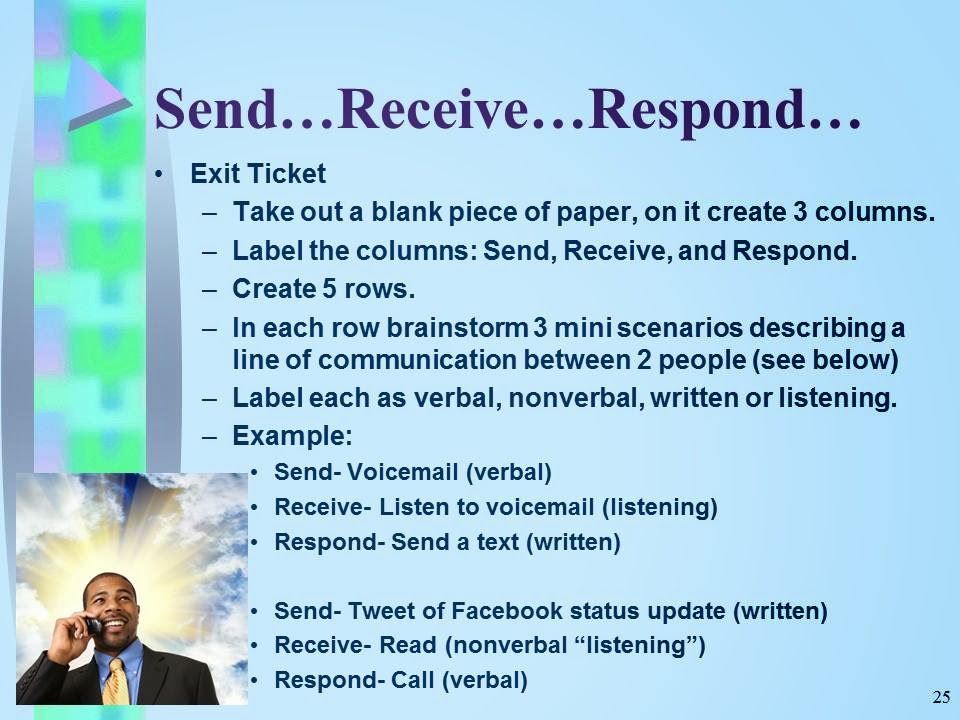
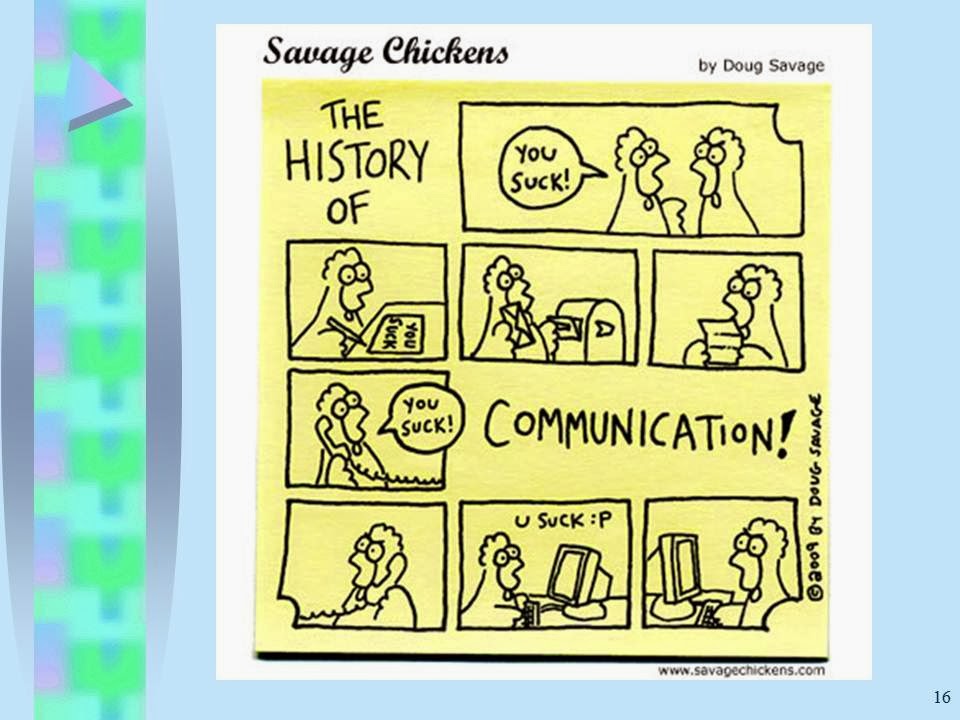
Students (and adults) often take for granted concepts within communication that are widely accepted and somewhat obvious, for example we all know that there are different types of communication; verbal, nonverbal, written, and listening (receiving/interpretation). Student response- so what!? Well, there is also a very nuanced, and culturally specific, set of rules (etiquette) pertaining to each of these communication types. These rules also vary based on social economics, and age. Here is an example, I teach communication, and yet I found myself frustrated when an otherwise very academic, and extremely polite young lady in my class refused to look me in the eye when I was speaking to her. It was only after a professional development, which focused on providing insight into our refugee student population and their cultural experiences, that I learned that in this young woman's culture it was disrespectful to look a teacher in the eye. For many reasons, she would not have had the ability and or comfort level necessary to explain this to me, so without the insight this PD provided I would have continued to be frustrated, and overtime this miscommunication would have certainly had an effect on our student/teacher relationship. I had to own the fact that I misinterpreted her nonverbal communication as a sign of disrespect when it was in fact just the opposite. Communicating my apology was challenging and humbling, but completely necessary, and I was able to apply this knowledge when differentiating my instruction. Personal and professional opportunities for growth present themselves often if we open ourselves up to receiving them.

I use the following series of activities to foster an heightened awareness of the "obvious" and to lay a foundation for a more in depth exploration of communication.


Monday, February 10, 2014

Resource- Link to Art for the Nations

Link- Art for the Nations


Art for the Nations provides a critical service and an enriching opportunity to bring service learning to middle school students.

Resource- Link to Edtopia

Link- Edutopia

Edtopia is a wonderful resource for reference material in the form of articles, videos, blogs, and discussion forums. Below is an excerpt from their mission, above is a link to the site.

The George Lucas Educational Foundation (GLEF)


Our Mission

GLEF is dedicated to improving the K-12 learning process by documenting, disseminating, and advocating innovative, replicable, and evidence-based strategies that prepare students to thrive in their future education, careers, and adult lives.

Our Vision

Our vision is of a new world of learning, a place where students and parents, teachers and administrators, policy makers and the people they serve are all empowered to change education for the better; a place where schools provide rigorous project-based learning, social-emotional learning, and access to new technology; a place where innovation is the rule, not the exception; a place where students become lifelong learners and develop 21st-century skills, especially three fundamental skills:
  • how to find information;
  • how to assess the quality of information;
  • how to creatively and effectively use information to accomplish a goal.
It’s a place of inspiration and aspiration based on the urgent belief that improving education is the key to the survival of the human race. We call this place Edutopia, and we provide not just the vision for this new world of learning but the real-world information and community connections to make it a reality.


*Source- http://www.edutopia.org/mission-vision